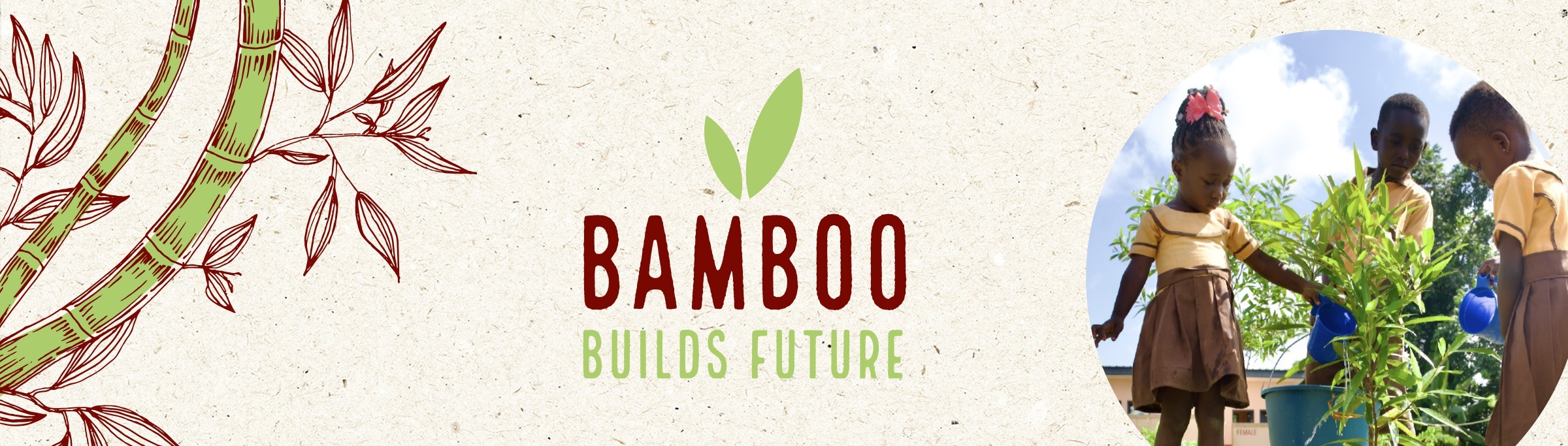

Bamboo Builds Future

Our Vision

With Bamboo Builds Future, we place bamboo at the center, as a sustainable building material and position it, as a true alternative to wood. Our goal is to gradually and sustainably replace conventional timber with bamboo in the long term. In doing so, we aim to contribute to the protection of natural resources and promote new approaches to material use, that are environmentally responsible and future-oriented.

At the same time, we see bamboo as a key element in the fight against climate change, due to its rapid growth rate and its ability to absorb large amounts of CO₂.
For us, bamboo is not just a raw material, but a shift in mindset, towards solutions, that are sustainable and built to last.

The State of Ghana’s Forests – A Critical Assessment

Ghana’s forests are in an alarming condition: over the past hundred years, forest cover has shrunk by around 80 percent, only one-fifth of the original forest area remains. The high demand for wood, especially for furniture and construction, accelerates the destruction of natural habitats, causes erosion, and alters the local climate. More than one-third of the country is also threatened by advancing desertification, the spread of the Sahara southward. Only consistent protection and reforestation measures can stop the further degradation of these valuable ecosystems.

Why Bamboo?

Bamboo can grow up to one meter per day, absorbs more CO₂ than many trees, and regenerates itself after harvesting. It serves as a sustainable alternative to tropical timber in the furniture and construction industries, helping to protect Ghana’s forests from deforestation, while creating new opportunities for people and the environment.

In addition, wood in tropical regions is highly susceptible to termite infestation, which significantly reduces its lifespan. Bamboo offers a real alternative here, as it is not attractive to termites.

Our Approach

With Bamboo Builds Future, we take a holistic approach, from start to finish. From cultivating bamboo, to producing the final product, we are building a complete local value chain on the ground.

Our approach is based on three pillars:

  1. the bamboo plantation as the foundation for raw material,
  2. the workshop for processing, and
  3. the training of skilled workers, who will carry this knowledge forward in the long term.

This creates a system that is practical, independent, and able to grow step by step. At the same time, we ensure that know-how, jobs, and value creation remain within the country.

1. Our Bamboo Farm

Objective of the Farm
Various bamboo species are native to Ghana, but not all are suitable for every purpose. Each species has its own specific characteristics and applications.
That is why we have taken a close look at which bamboo species are truly suitable for our goals. Over the past year, we have analyzed, researched, and consulted with experts. One thing became clear: there are currently no large-scale farms, that can reliably supply us with the raw materials we need. This is exactly where we come in.

Land & Locations
We are currently in the final phase of securing land. The areas offered to us are located in a region with ideal climatic conditions for bamboo cultivation.

On this land, we can create exactly what is needed: reforestation, sustainable use, and new opportunities for local communities.

This land is not a given. In many regions, soil is being destroyed by illegal surface mining, locally know as Galamsey. Land becomes unusable, water is polluted, and livelihoods are lost.
By securing this land, we protect it from exactly that.

Bamboo Species
We are currently focusing on four bamboo species that are particularly suitable for our objectives:
Dendrocalamus asper
Bambusa balcooa
Guadua angustifolia
Bambusa vulgaris

This selection is based on their properties in terms of strength, growth, and processing potential.

Cultivation & Sustainable Management
Our approach is to build the entire value chain locally. That is why we plan to establish not only the plantation, but also the workshop, storage, and infrastructure directly on site.

Short distances reduce transport, lower costs, and avoid additional CO₂ emissions. At the same time, accommodation will be created for employees and their families, eliminating long commutes.

A plantation of this scale also creates real opportunities for surrounding communities. Jobs are created locally, economic impulses remain within the region, and a new understanding of sustainable land use can grow.

Especially in areas affected by illegal surface mining, we are establishing a conscious alternative: sustainable use, for example in combination with agricultural crops such as maize, instead of destruction.

Project Status & Progress
We are currently close to acquiring the land and thereby laying the foundation for everything that follows. This will create a place that is protected instead of exploited, a place where nature can grow while new economic opportunities emerge.

For this, we need support.

With €25, 100 m² of land can be secured.

  • 100 m² that will remain protected.
  • 100 m² where bamboo grows alongside crops.
  • 100 m² of future.

Together, we can secure this space and build something that will last.

2. Our Bamboo Workshop – Bambility Workshop

The Workshop
In our bamboo workshop, raw bamboo is transformed into a finished product. This is where the entire processing takes place, from freshly harvested bamboo from the farm, to a ready-to-use end product, such as a school desk.

Production Process
After harvesting, the bamboo is prepared for further processing. First, it is placed in a soaking bath. This process makes it more resistant to environmental influences and removes starches and sugars, that could make it susceptible to pests.
This is followed by a drying phase, where natural conditions such as sun, shade, and air circulation are used. Only after this stage is the bamboo ready for actual processing.

Products & Innovation
Bamboo differs significantly from wood in its structure and form, which brings its own challenges in processing. Creating uniform, straight surfaces is more complex than with wood.
We see this as an opportunity to develop new solutions and further advance the use of bamboo. In doing so, we collaborate with experts from Germany, Guatemala, Bali, and Ghana.

Our first product is alr

eady in use: a bamboo school desk. Large parts of the construction are already made from bamboo.

A comparison illustrates the impact: eight bamboo school desks can save the life of one large rainforest tree.

Quality Standards
Before entering production, we developed and tested various prototypes. These were reviewed and approved by the Ghana Education Service.
The dimensions are based on existing standards in Ghana as well as international guidelines. What matters most to us is, that the products are practical, robust, and suitable for everyday use on the ground.

Jobs & Local Value Creation
The entire value chain takes place locally. We work exclusively with local professionals and are gradually building a team capable of independently managing production.
This creates jobs, income, and new opportunities directly within the region. At the same time, knowledge remains in the country and continues to grow.
Our goal is not only to produce goods, but to build structures that are sustainable, independent, and built to last.


How You Can Help

Donate now — and let education grow!
With your support, you enable:

  • One Bamboo Seedling – 3,50€
  • 100m² Farmland for – 25€
  • One school bench for a child – €35
  • One furniture set (table with 5 chairs) for kindergarten – €125
  • Furniture for an entire class (30 children) – €1,050
 

Related Projects


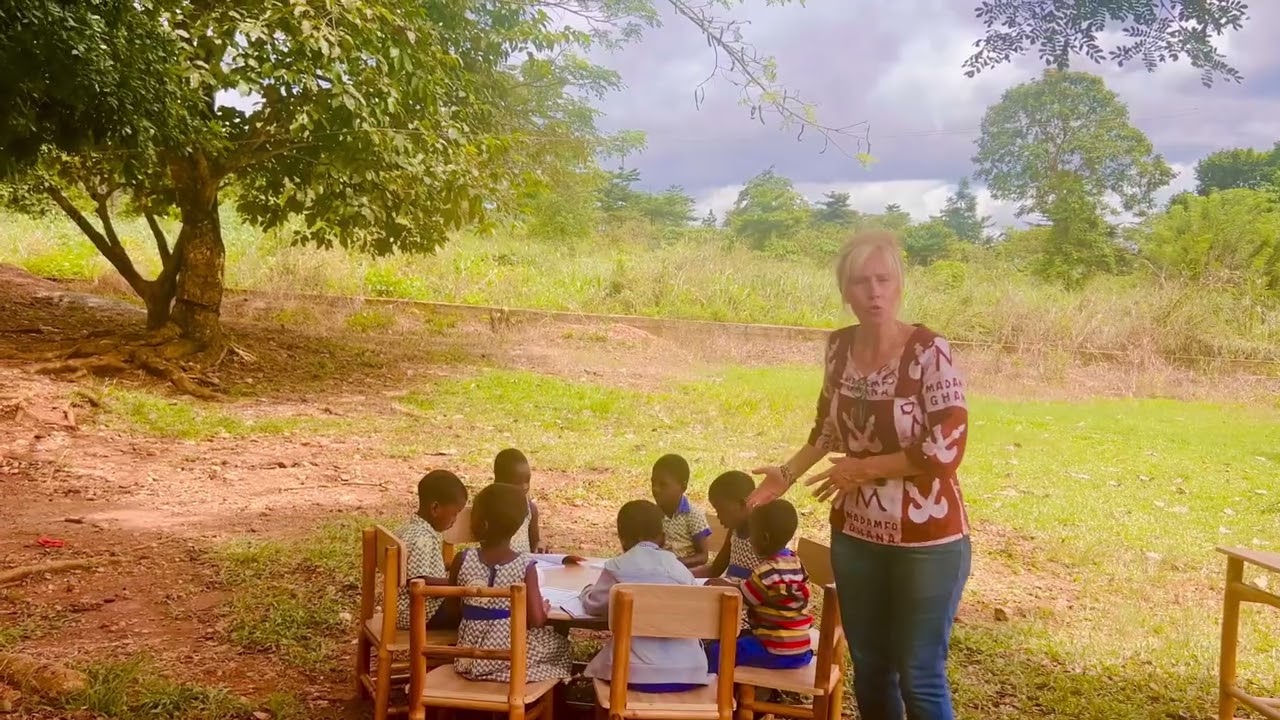
Introduction of our Bamboo-Schooldesk
YouTube

By loading the video, you accept YouTube's privacy policy.
Learn more

Load video